

1. Physical Location & Structural Integration
The primary distinction between an OCA Glass and a tempered glass screen protector lies in their physical placement and structural integration within a smartphone.
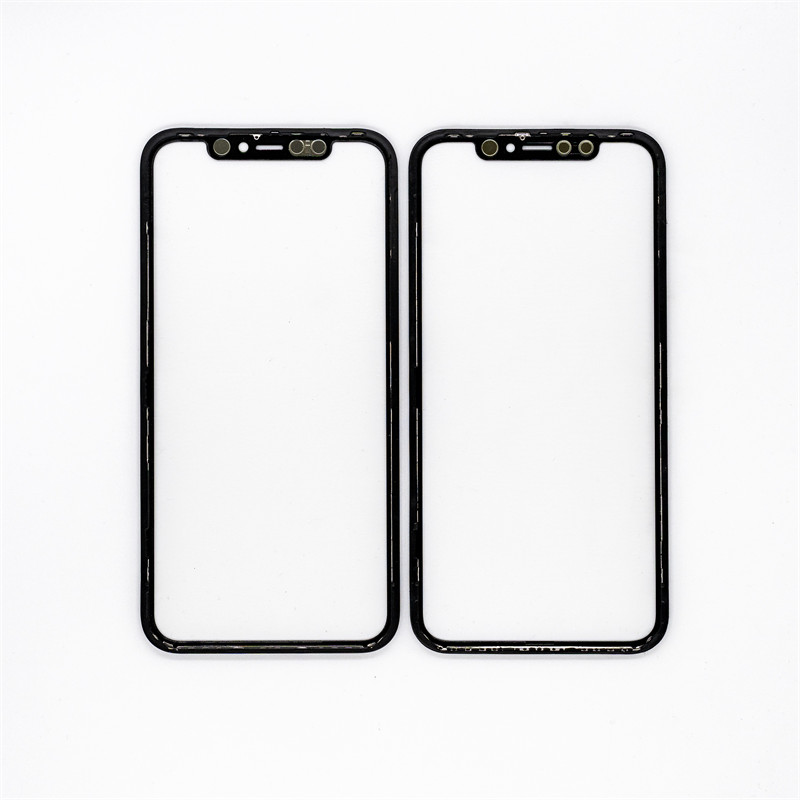
● OCA Glass: This is the factory-installed outer glass layer of the phone's native display assembly. It constitutes an integral part of the hardware structure, situated immediately above the touch sensor and display panel (LCD/OLED). It is bonded directly to the inner screen by the manufacturer. If it shatters, it represents actual hardware damage that requires professional screen refurbishment or a full assembly replacement.
● Tempered Glass Screen Protector: This is an aftermarket accessory purchased and applied by the end-user. It adheres directly onto the outermost surface of the factory OCA Glass. It serves purely as an external sacrificial layer and is not a component of the device's internal engineering.
2. Material Specs, Thickness, and Hardness
The raw engineering parameters, chemical strengthening processes, and structural roles of these two layers are vastly different.
● OCA Glass: Manufactured from high-aluminosilicate glass (such as Corning Gorilla Glass or Schott Xensation), it typically measures around 0.55mm to 0.7mm in thickness. It undergoes deep chemical ion-exchange tempering to achieve extreme hardness, scratch resistance, and structural rigidity. It acts as the primary structural skeleton protecting the delicate underlying display.
● Tempered Glass Screen Protector: Generally much thinner, ranging from 0.1mm to 0.33mm. It is mostly made from standard soda-lime glass or lower-grade aluminosilicate glass. Its chemical tempering depth is significantly shallower, meaning its absolute hardness and impact resistance are much lower. Its primary design purpose is to fracture upon high impact to absorb and dissipate kinetic energy, acting as a buffer.
3. Adhesive Technology & Optical Bonding
The adhesive interface determines the optical clarity and touch responsiveness of the smartphone.
● OCA (Optically Clear Adhesive) Layer: The inner side of the cover glass utilizes a solid-state, specialized acrylic adhesive film (OCA). It features ultra-high light transmittance (>99%), zero bubble formation, high thermal stability, and maximum adhesion. It is applied via precise vacuum-high-pressure lamination machinery. This eliminates air gaps, minimizes internal light reflection, and ensures flawless color accuracy and touch sensitivity.
● AB Adhesive (Screen Protector Glue): Screen protectors rely on a dual-layer AB silicone adhesive. The "A" layer bonds to the film, while the "B" layer relies on electrostatic adsorption to cling to the phone's screen. It offers weak adhesion, is prone to edge-lifting, bubble accumulation, and dust ingress, and can degrade or delaminate when exposed to localized heat.
4. Consequence of Damage
When an impact occurs, the failure mode of each component leads to completely different repair scenarios.
Cover glass with OCA Failure: If only the outer glass shatters while the underlying OLED/LCD continues to display and track touch inputs normally, it is possible to perform a "glass-only" refurbishment. However, if the impact propagates deeper, it will destroy the fragile display matrix or digitizer, ruining the entire display assembly. Without an intact cover glass, the underlying display layers are left completely defenseless against minor pressures.
Tempered Glass Protector Failure: When this layer cracks, there is no threat to the smartphone's hardware. The user simply peels the damaged film off, discards it, and applies a new one. The underlying original factory cover glass remains completely undamaged and clean.
5. Functional Purpose & Engineering Role
Core Functions of OCA Glass:
● Acts as the primary protective structural shell and load-bearing body of the entire screen assembly.
● Integrates and supports the touch-sensing electrode matrices (many premium displays etch the touch circuitry directly onto the inner surface of the cover glass).
● Provides a hermetic seals against water vapor, liquids, and environmental dust.
● Preserves the OEM-specified optical transmittance, brightness, and anti-fingerprint/oleophobic tactile feel.
Core Functions of Tempered Glass Screen Protector:
● Serves exclusively as a sacrificial barrier against daily cosmetic hazards (such as key scratches in pockets).
● Provides a temporary oleophobic and hydrophobic coating to repel fingerprints.
● Absorps minor drops without involving or altering the phone's factory structural seal.
6. Replacement Procedure, Equipment, and Costs
The technical threshold and monetary expenses required for replacement create a sharp divide between these components.
● Replacing an OCA Glass: This requires professional technician intervention. The broken assembly must be heated and separated using wire slicing, cleaned of old glue residues, and laminated with a fresh OCA sheet inside a class-100 dust-free cleanroom using a vacuum screen-press laminator and an autoclave bubble-remover machine. The process demands high technical skills and typically costs anywhere from $20 to $150 depending on the device model.
● Replacing a Tempered Glass Screen Protector: This is a frictionless, DIY process. The end-user can manually align and drop the glass onto the screen anywhere without opening the device. It requires zero tools or professional skills, with costs ranging from $1 to $20 per protector.
7. The Ultimate Solution for End Users & Technicians
To maximize smartphone longevity, maintain perfect display performance, and optimize repair economics, the optimal strategy requires a clear division of labor between both layers.
● Do Not Conflate the Two Layers: Always recognize that the OCA Glass is the screen’s true first hardware barrier, while the Tempered Glass Protector is a renewable sacrificial layer. Never rely on a screen protector to save a phone from high-altitude concrete drops, as the impact can still crack the underlying OCA glass through the protector.
● Optimal Protection Synergy: To prevent expensive glass refurbishment bills, apply a high-quality, high-aluminosilicate tempered glass protector (0.33mm with a premium oleophobic coating) over the factory OCA glass. This combination balances structural safety with original user experience.
● Refurbishment Strategy for Broken Glass: If the phone falls and only the outer glass fractures while the display remains flawless, look for a repair shop equipped with specialized vacuum lamination and autoclave de-bubbling machines to replace just the OCA Glass. This preserves your expensive original OEM internal display panel at a fraction of the cost of a full screen assembly replacement.